The second chapter of the Gitais titled Sankhya Yoga with 72 verses is among the largest chapters in the Gita. It gives in a nutshell the superb teachings that follow in the subsequent chapters.
As we have seen in Chapter 1, Arjuna, overwhelmed by the fact that he would have to fight his near and dear ones, is retreating from the fight and is totally dejected. The chapter continues with the continuing psychological fall of Arjuna.
This chapter also brings out the strategy employed by Krishna to resuscitate the falling spirits of Arjuna. Here, is probably one of the grandest psycho-analytical technique to manage a distressed person. Krishna never utters one word as Arjuna keeps on ranting about his reasons for not fighting. But once Krishna starts, the strategy employed is simply overwhelming. This is a chapter for coaches to follow when their players are in distress, managers when their employees are in distress or for any of us when our loved ones are in distress.
As most of us are aware, trying to calm down a totally distressed person by using logic or by commiserating with them is almost fruitless. Have we not experienced this often in our lives? There is an event that shatters us totally or there is a potential threat of an event that shatters us totally. Have we not heard of people committing suicide when faced with a financial disaster? Have we not heard of people totally overwhelmed by events and becoming totally paralysed? Have we not seen the impact of intense grief brought by the death of a loved one on our emotional well being? When faced with such situations ourselves or when we are in a position where one of our loved ones is in such a situation, how can we bring the person or ourselves as the case maybe to our right thinking stage?
There is a need almost to strike a blow to bring the person back to their reasonable ability to think. I do not mean a physical blow, but an intellectual blow. There is a need to make the distressed person give up all inhibitions about seeking help and making him surrender to a sane person. The way Krishna overwhelms Arjuna almost into intellectual subjugation to his superior intellect, by using the logic of real existence and the meaning of life and death is simply overwhelming. This he does by enunciating the concept of the soul and its transmigration. He also explains the concept of the Life principle and the permanence of the soul.
The Gita, though a very practical text that can be used in day to day life, goes much beyond the mundane existence and shows readers the highest goal and how to achieve it. The three primary paths are the path of action, the path of devotion and the path of renunciation(through the use of the intellect). One of the paths that is summarized is the Karma yoga. The first thing is awareness of the condition that we are in and the next step is to do the right thing. But then, what is the right thing to do and how to do the right thing? In this chapter, Krishna summarizes what right action means through an exposition of the principles of Karma Yoga or the path of action. He also explains in brief the attitude to be had when doing action, which is a whole new concept, called desire less action. The chapter also briefly explains the path of devotion and the path of renunciation.
All of us talk of being in a stage of perfection or absolute bliss. But what does it really mean? The chapter summarizes the state of perfection and how an individual in that state acts in the world. Before dismissing this just as a spiritual goal only, it will help all of us realize how effective and efficient we will be in that state in our day to day work too. It is obvious that stress impacts each of us in day to day work. But how we react to stress is what differentiates the winners from the losers. This is not only from the perspective of a superb employee versus a poorly performing employee, but also from a perspective of a good and bad parent, a good and bad spouse, to name a few.
I welcome you to join me in this journey of a fascinating chapter and hopefully at the end of the chapter, we will be aware of the root cause of stress, the impact of stress and how to act in a situation of stress. Hopefully this will enable us to become a better parent, spouse, employee or in total, a better individual, who is able to enjoy every moment of his life.
------------------------------------------------------------------
As we have seen in Chapter 1, Arjuna, overwhelmed by the fact that he would have to fight his near and dear ones, is retreating from the fight and is totally dejected. The chapter continues with the continuing psychological fall of Arjuna.
This chapter also brings out the strategy employed by Krishna to resuscitate the falling spirits of Arjuna. Here, is probably one of the grandest psycho-analytical technique to manage a distressed person. Krishna never utters one word as Arjuna keeps on ranting about his reasons for not fighting. But once Krishna starts, the strategy employed is simply overwhelming. This is a chapter for coaches to follow when their players are in distress, managers when their employees are in distress or for any of us when our loved ones are in distress.
As most of us are aware, trying to calm down a totally distressed person by using logic or by commiserating with them is almost fruitless. Have we not experienced this often in our lives? There is an event that shatters us totally or there is a potential threat of an event that shatters us totally. Have we not heard of people committing suicide when faced with a financial disaster? Have we not heard of people totally overwhelmed by events and becoming totally paralysed? Have we not seen the impact of intense grief brought by the death of a loved one on our emotional well being? When faced with such situations ourselves or when we are in a position where one of our loved ones is in such a situation, how can we bring the person or ourselves as the case maybe to our right thinking stage?
There is a need almost to strike a blow to bring the person back to their reasonable ability to think. I do not mean a physical blow, but an intellectual blow. There is a need to make the distressed person give up all inhibitions about seeking help and making him surrender to a sane person. The way Krishna overwhelms Arjuna almost into intellectual subjugation to his superior intellect, by using the logic of real existence and the meaning of life and death is simply overwhelming. This he does by enunciating the concept of the soul and its transmigration. He also explains the concept of the Life principle and the permanence of the soul.
The Gita, though a very practical text that can be used in day to day life, goes much beyond the mundane existence and shows readers the highest goal and how to achieve it. The three primary paths are the path of action, the path of devotion and the path of renunciation(through the use of the intellect). One of the paths that is summarized is the Karma yoga. The first thing is awareness of the condition that we are in and the next step is to do the right thing. But then, what is the right thing to do and how to do the right thing? In this chapter, Krishna summarizes what right action means through an exposition of the principles of Karma Yoga or the path of action. He also explains in brief the attitude to be had when doing action, which is a whole new concept, called desire less action. The chapter also briefly explains the path of devotion and the path of renunciation.
All of us talk of being in a stage of perfection or absolute bliss. But what does it really mean? The chapter summarizes the state of perfection and how an individual in that state acts in the world. Before dismissing this just as a spiritual goal only, it will help all of us realize how effective and efficient we will be in that state in our day to day work too. It is obvious that stress impacts each of us in day to day work. But how we react to stress is what differentiates the winners from the losers. This is not only from the perspective of a superb employee versus a poorly performing employee, but also from a perspective of a good and bad parent, a good and bad spouse, to name a few.
I welcome you to join me in this journey of a fascinating chapter and hopefully at the end of the chapter, we will be aware of the root cause of stress, the impact of stress and how to act in a situation of stress. Hopefully this will enable us to become a better parent, spouse, employee or in total, a better individual, who is able to enjoy every moment of his life.
------------------------------------------------------------------
3 of my books
As readers may be aware, 3 of my books on spirituality are available on Amazon.com.
I invite readers of my blog to try any of the books and give me feedback so that I can make changes in the next edition.
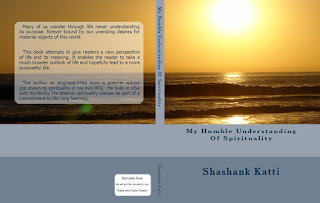
1. My Humble Understanding Of Spirituality
My Humble Understanding Of Spirituality
2. Attain Infinite Bliss
Attain Infinite Bliss - A Spiritual Guide

3. The Spirit Of Spirituality
The Spirit Of Spirituality

I invite readers of my blog to try any of the books and give me feedback so that I can make changes in the next edition.
1. My Humble Understanding Of Spirituality
My Humble Understanding Of Spirituality

2. Attain Infinite Bliss
Attain Infinite Bliss - A Spiritual Guide

3. The Spirit Of Spirituality
The Spirit Of Spirituality


