In an earlier article, I had introduced readers to the concepts of meditation. In this article, I will go a step further and discuss the meditation process. Please note that as meditation progresses, there is a need for a very specialized knowledge which we will discuss when I come to that stage of meditation. Broadly meditation consists of the following stages:
A: Develop a routine
Meditation needs dedication, a commitment and a willingness to put in effort even if results are not apparent at all.
It is absolutely imperative to develop a fixed schedule and stick to it. This is similar to any other human effort. If I want to get fit, I need to stick to a routine of regular exercises. If I have to reduce weight, I have to stick to a routine of exercises and diet control. Similarly, for meditation, it is absolutely essential to have a routine.
The suggestion is to select a quiet place away from regular activities. Over a period of time, that place should automatically be associated in the mind as a place for meditation. We go into the kitchen and the mind is associated with eating. We go to the bed room and mind associates with sleeping. Similarly, it is necessary to have a location, which the mind automatically associates with meditation. Practitioners are also suggested to have a fixed time every day to meditate.
Even if one does not gain the real benefits of meditation, the very act of following a routine, even if not exactly interesting, is something that can surely help in mind training and building discipline in life.
B. Get a hook to hang the mind
The mind is a very restless organ and moves from thoughts to thoughts. A key element of meditation is focus. The mind needs something to focus on, else will wander. So, it is suggested that practitioners have something they identify with as positive as a hook for their mind. I identify with the picture of Miss Universe. Can I use it as a hook? This does not make sense from a meditation perspective. The idea is to hook the mind to something from which it will not stray into multiple thoughts. Hooking on Miss Universe will potentially move the mind to think of a date with her, dinner and much more and defeat the purpose of meditation. Typically, it is suggested to use a picture of something holy, like a saint, a monument, a holy book etc. If someone is not religious at all, one can use a light source like a candle.
Practitioners should sit in a comfortable position and focus on the object and to the extent possible think only of the object. As meditation progresses, it may be possible to eliminate the physical object and instead focus on the mental image of that object.
C. Concentrate on the object of meditation and develop awareness
In our day to day life, we are flooded with thousands of thoughts. Even as we are at work, we get thoughts of family and vice versa. So, when we sit for meditation on an object, it is very common for the mind to wander into different areas. We should not force the mind to come back to the object. It is very important to become aware that the mind has strayed and gently nudge it back to the object. It is fine to have imaginary conversations to enable the mind to get back to its original thought. In my case, as i meditate, I get thoughts of some individuals. I may not even be aware that my mind has strayed. Once I become aware, I imagine myself telling that individual who came in my thoughts, that I need to be excused and come back to my thoughts on object of meditation. As the practice progresses, it becomes easier and quicker to realize that the mind has strayed and to bring it back to the original objective.
D. Develop a stream of same thoughts
As the practice develops and one is quite comfortable with the routine of meditation, one can think of a phrase or a name and continuously utter it mentally as one thinks of it. The idea is to have a continuous stream of thoughts focusing only one element. An ideal term for meditating would be the word Om. It is suggested that the gap between thinking of the word be minimal initially. so it is almost a fast repetition mentally of the word.
E. Become aware of the silence
As one becomes more comfortable with the same thought process, one should gradually increase the gap between the repetition. For example, if initially there is a small gap of about one second, it should gradually be increased. The idea here is to gradually make the mind free of thoughts even for very small periods of time.
Till this stage, there was the meditator and the meditating object. As the period of silence increases, the object is gone and in the advanced stage, we lose awareness of our physical being and the mental being. It is as though there is nothing.
F. Develop understanding of the one source of consciousness
As the time of silence increases, one should contemplate on the source of reality. I am not the body. I am not the mind. Why? Anything that I can experience or am aware of, cannot be me. I know my hands, legs etc. so I cannot be the body. I am aware of my thoughts and emotions. So, I cannot be the mind. Then who am I? I am the Awareness principle or the consciousness principle. Are there multiple awareness principles? Is my awareness or consciousness principle different from your's? As meditation proceeds to the highest level, the only awareness is that there is only consciousness and that consciousness is same for everyone.
G. Become the consciousness
This is in the final stage of meditation. The body, mind, intellect are all disowned and the meditator has himself become consciousness, after which there is permanent bliss. The mud pot has realized it is mud and does not have to worry about other beautiful pots. The small wave has realized it is the ocean and does not need to be threatened by bigger waves. The meditator has realized that he is Consciousness or the Universal principle and need not be bound by the limitations of time, space and any other boundaries we as humans experience.
Conclusion
Meditation is a process and needs consistent practice. It needs dedication so as to overcome initial setbacks. It needs faith to continue on the path even with no apparent benefits. The initial stages of meditation do not require any major knowledge. However, to make progress from stage E onwards, needs a grounding in principles of spirituality. I suggest readers attend lectures on spirituality or at a minimum read books on spirituality. At the cost of being called, non modest, I recommend my book, details of which are below:
As readers may be aware, 3 of my books on spirituality are available on Amazon.com.
I invite readers of my blog to try any of the books and give me feedback so that I can make changes in the next edition.
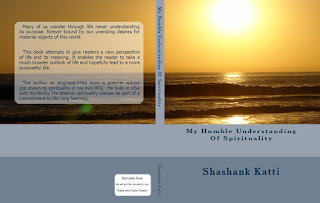
1. My Humble Understanding Of Spirituality
My Humble Understanding Of Spirituality
2. Attain Infinite Bliss
Attain Infinite Bliss - A Spiritual Guide

3. The Spirit Of Spirituality
The Spirit Of Spirituality

A: Develop a routine
Meditation needs dedication, a commitment and a willingness to put in effort even if results are not apparent at all.
It is absolutely imperative to develop a fixed schedule and stick to it. This is similar to any other human effort. If I want to get fit, I need to stick to a routine of regular exercises. If I have to reduce weight, I have to stick to a routine of exercises and diet control. Similarly, for meditation, it is absolutely essential to have a routine.
The suggestion is to select a quiet place away from regular activities. Over a period of time, that place should automatically be associated in the mind as a place for meditation. We go into the kitchen and the mind is associated with eating. We go to the bed room and mind associates with sleeping. Similarly, it is necessary to have a location, which the mind automatically associates with meditation. Practitioners are also suggested to have a fixed time every day to meditate.
Even if one does not gain the real benefits of meditation, the very act of following a routine, even if not exactly interesting, is something that can surely help in mind training and building discipline in life.
B. Get a hook to hang the mind
The mind is a very restless organ and moves from thoughts to thoughts. A key element of meditation is focus. The mind needs something to focus on, else will wander. So, it is suggested that practitioners have something they identify with as positive as a hook for their mind. I identify with the picture of Miss Universe. Can I use it as a hook? This does not make sense from a meditation perspective. The idea is to hook the mind to something from which it will not stray into multiple thoughts. Hooking on Miss Universe will potentially move the mind to think of a date with her, dinner and much more and defeat the purpose of meditation. Typically, it is suggested to use a picture of something holy, like a saint, a monument, a holy book etc. If someone is not religious at all, one can use a light source like a candle.
Practitioners should sit in a comfortable position and focus on the object and to the extent possible think only of the object. As meditation progresses, it may be possible to eliminate the physical object and instead focus on the mental image of that object.
C. Concentrate on the object of meditation and develop awareness
In our day to day life, we are flooded with thousands of thoughts. Even as we are at work, we get thoughts of family and vice versa. So, when we sit for meditation on an object, it is very common for the mind to wander into different areas. We should not force the mind to come back to the object. It is very important to become aware that the mind has strayed and gently nudge it back to the object. It is fine to have imaginary conversations to enable the mind to get back to its original thought. In my case, as i meditate, I get thoughts of some individuals. I may not even be aware that my mind has strayed. Once I become aware, I imagine myself telling that individual who came in my thoughts, that I need to be excused and come back to my thoughts on object of meditation. As the practice progresses, it becomes easier and quicker to realize that the mind has strayed and to bring it back to the original objective.
D. Develop a stream of same thoughts
As the practice develops and one is quite comfortable with the routine of meditation, one can think of a phrase or a name and continuously utter it mentally as one thinks of it. The idea is to have a continuous stream of thoughts focusing only one element. An ideal term for meditating would be the word Om. It is suggested that the gap between thinking of the word be minimal initially. so it is almost a fast repetition mentally of the word.
E. Become aware of the silence
As one becomes more comfortable with the same thought process, one should gradually increase the gap between the repetition. For example, if initially there is a small gap of about one second, it should gradually be increased. The idea here is to gradually make the mind free of thoughts even for very small periods of time.
Till this stage, there was the meditator and the meditating object. As the period of silence increases, the object is gone and in the advanced stage, we lose awareness of our physical being and the mental being. It is as though there is nothing.
F. Develop understanding of the one source of consciousness
As the time of silence increases, one should contemplate on the source of reality. I am not the body. I am not the mind. Why? Anything that I can experience or am aware of, cannot be me. I know my hands, legs etc. so I cannot be the body. I am aware of my thoughts and emotions. So, I cannot be the mind. Then who am I? I am the Awareness principle or the consciousness principle. Are there multiple awareness principles? Is my awareness or consciousness principle different from your's? As meditation proceeds to the highest level, the only awareness is that there is only consciousness and that consciousness is same for everyone.
G. Become the consciousness
This is in the final stage of meditation. The body, mind, intellect are all disowned and the meditator has himself become consciousness, after which there is permanent bliss. The mud pot has realized it is mud and does not have to worry about other beautiful pots. The small wave has realized it is the ocean and does not need to be threatened by bigger waves. The meditator has realized that he is Consciousness or the Universal principle and need not be bound by the limitations of time, space and any other boundaries we as humans experience.
Conclusion
Meditation is a process and needs consistent practice. It needs dedication so as to overcome initial setbacks. It needs faith to continue on the path even with no apparent benefits. The initial stages of meditation do not require any major knowledge. However, to make progress from stage E onwards, needs a grounding in principles of spirituality. I suggest readers attend lectures on spirituality or at a minimum read books on spirituality. At the cost of being called, non modest, I recommend my book, details of which are below:
As readers may be aware, 3 of my books on spirituality are available on Amazon.com.
I invite readers of my blog to try any of the books and give me feedback so that I can make changes in the next edition.
1. My Humble Understanding Of Spirituality
My Humble Understanding Of Spirituality

2. Attain Infinite Bliss
Attain Infinite Bliss - A Spiritual Guide

3. The Spirit Of Spirituality
The Spirit Of Spirituality


